BAS Science Strategy Executive Group

The responsibility of Science Strategy Executive Group is to provide oversight and strategic direction for the BAS Science Directorate. In particular, to focus on issues that affect the long-term delivery of a world-class, sustainable science programme.

Specific responsibilities of SSEG are to:

  • work collegiately to deliver solutions to strategic issues for the benefit of all BAS Science and the organisation as a whole;
  • take responsibility to develop, implement, and maintain a science strategy that keeps BAS at the forefront of polar science, meeting the current NERC science strategy and delivering the BAS Vision;
  • ensure the delivery of the BAS science programme, assessing progress, and ensuring excellent scientific outcomes;
  • ensure that BAS leads and participates in scientific initiatives that lead to major advances in knowledge and expertise;
  • foster a vibrant and fertile intellectual environment within BAS, in which all scientists are challenged to develop bold and exciting scientific ideas, and to develop their personal and professional skills;
  • identify opportunities and ensure innovation, beneficial contact with stakeholders, and maximise the impact of BAS Science;
  • identify and initiate opportunities to maintain and increase funding within BAS Science, and maintain a sustainable funding plan;
  • agree any changes or adjustments required to ensure the sustainable funding and overall delivery of crucial science activities;
  • monitor performance of BAS’s science portfolio, and ensure its scientists perform in line with the expectations of BAS and NERC, highlighting and praising excellence, and where required, implementing measures to improve performance;
  • identify, and seek to overcome, impediments to scientific progress; reporting those that cannot be overcome to the BAS Executive.

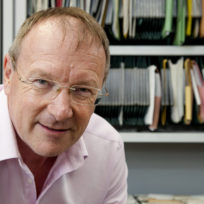
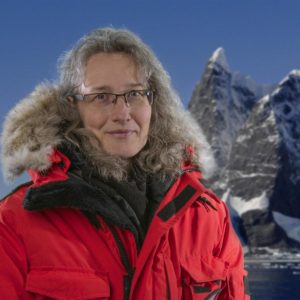
Chair: Dr Anna Jones, Director of Science

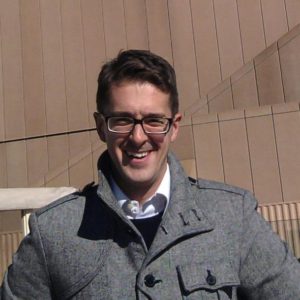
daho

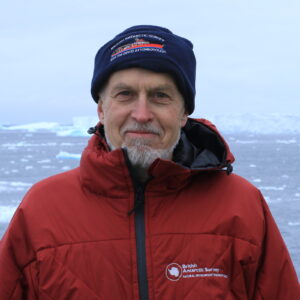
Dominic Hodgson

Interim Director of Science

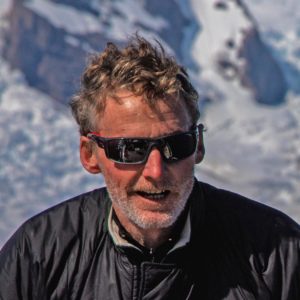
rh

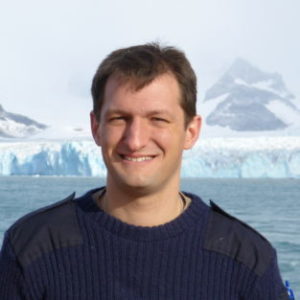
Richard Horne

Science Leader - IMP 1

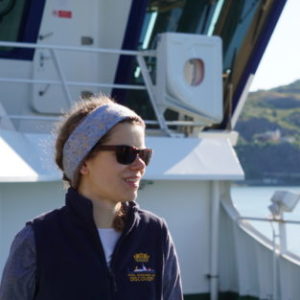
mmm

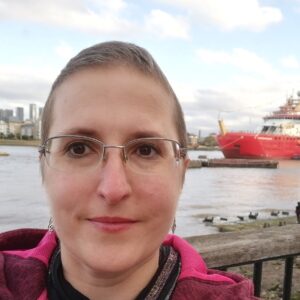
Michael Meredith

Science Leader IMP 2

jacr

Alistair Crame

Science Leader

lspe

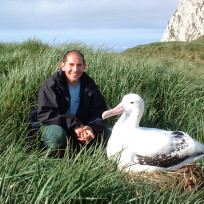
Lloyd Peck

Physiologist Adaptations Lea IMP 2

beatrix

Beatrix Schlarb-Ridley

Director of Innovations and Impact

mcl

Mags Clark

Head of Future Financial Strategy

macol

Martin Collins

Marine Ecologist and UKs CCAMLR Scientific Rep
lsim

Louise Sime

IDP Science Leader IMP 3

tmof

Tracy Moffat-Griffin

Science Leader

gant

Geraint Tarling

Science Leader IMP 3

jask

Scott Hosking

Environmental Data Scientist

marrog

Martin Rogers

Machine Learning Research Scientist

mpf

Mervyn Freeman

Science Leader


BAS wins National Capability Funding

12 September, 2018

The British Antarctic Survey has been awarded National Capability funds for polar science which will strengthen UK national security, resilience, economic growth and societal benefit


A review of Autonomous Reef Monitoring Structures (ARMS) for monitoring hard-bottom benthic biodiversity

1 December, 2025 by Lloyd Peck, Melody Clark

Amid 1. increasing anthropogenic pressures on ecosystems, standardised biodiversity monitoring is critical for assessing biodiversity change. Marine hard-bottom habitats, though ubiquitous and biodiverse, present challenges for biodiversity monitoring due to…

Read more on A review of Autonomous Reef Monitoring Structures (ARMS) for monitoring hard-bottom benthic biodiversity

Benthopelagic Deep-Sea Food Webs Along a Latitudinal Gradient in the Scotia Sea (Southern Ocean)

28 October, 2025 by Gabriele Stowasser, Jose Marques Queiros, Jose Dos Santos Abreu, Martin Collins, Mark Belchier, Philip Hollyman

Understanding food-web structure is crucial to determine the functioning of ecosystems and sustainably manage resources. The Scotia Sea is an important area for Antarctic krill and toothfish fisheries, and one…

Read more on Benthopelagic Deep-Sea Food Webs Along a Latitudinal Gradient in the Scotia Sea (Southern Ocean)

Heated settlement plates (HSPl) in global experimentation: Experiences, research questions, future applications and collaborations

21 October, 2025 by Ainsley Hatt, David Barnes, Lloyd Peck, Melody Clark

Predicting how benthic assemblages respond to ocean warming remains a central challenge in marine ecology. Artificial units of habitat such as settlement plates have long been used to study marine…

Read more on Heated settlement plates (HSPl) in global experimentation: Experiences, research questions, future applications and collaborations

Per- and Polyfluoroalkyl Substances (PFAS) in Sub-Antarctic Seabirds: Insights into Long-Range Transport and Bioaccumulation of Legacy and Replacement Chemicals

3 October, 2025 by Lloyd Peck, Richard Phillips

Per- and polyfluoroalkyl substances (PFAS) are widespread environmental pollutants that can bioaccumulate in biota and cause a variety of adverse effects. Seabirds are useful bioindicators of pollutants in marine food…

Read more on Per- and Polyfluoroalkyl Substances (PFAS) in Sub-Antarctic Seabirds: Insights into Long-Range Transport and Bioaccumulation of Legacy and Replacement Chemicals

Freshwater Sources in the Global Ocean Through Salinity‐ δ 18 O Relationships: A Machine Learning Solution to a Water Mass Problem

1 October, 2025 by Michael Meredith

Changes in the hydrological cycle can affect ocean circulation and ventilation. Freshwater enters the ocean as meteoric water (MW; precipitation, river runoff, and glacial discharge) and sea ice meltwater (SIM).…

Read more on Freshwater Sources in the Global Ocean Through Salinity‐ δ 18 O Relationships: A Machine Learning Solution to a Water Mass Problem

A Global Speleothem-Based Assessment of Spontaneous Dansgaard–Oeschger Type Oscillations in Two Isotope-Enabled General Circulation Models

28 September, 2025 by Irene Malmierca Vallet, John Slattery, Louise Sime, Xu Zhang

Several general circulation models have now demonstrated the ability to simulate spontaneous millennial-scale oscillations that resemble Dansgaard–Oeschger (DO) events. It is often unclear how representative of DO events these simulations…

Read more on A Global Speleothem-Based Assessment of Spontaneous Dansgaard–Oeschger Type Oscillations in Two Isotope-Enabled General Circulation Models

Modelling snow algal habitat suitability and ecology under extreme weather events on the Antarctic Peninsula

23 September, 2025 by Lloyd Peck, Peter Convey, Peter Fretwell

Snow algae form extensive blooms within Antarctica’s coastal snowpacks and are a crucial contributor to its scarce terrestrial ecosystems. There is limited knowledge about the factors that contribute to snow…

Read more on Modelling snow algal habitat suitability and ecology under extreme weather events on the Antarctic Peninsula

Development of new global lake brGDGT-temperature calibrations: advances, applications, challenges, and recommendations

19 September, 2025 by Dominic Hodgson, Stephen Roberts, Tony Phillips

Branched glycerol dialkyl glycerol tetraethers (brGDGTs) are a group of temperature-sensitive membrane lipids found in bacteria that have been widely used in palaeo-temperature reconstruction. Despite recent advances in analytical methods,…

Read more on Development of new global lake brGDGT-temperature calibrations: advances, applications, challenges, and recommendations